
How Long Does It Take to Create a Hand-Painted Tote Bag? A Behind-the-Scenes Look
When people see one of my finished tote bags, they often ask the same question:
"How long does it take to make one?"
The answer is more than just the hours spent painting.
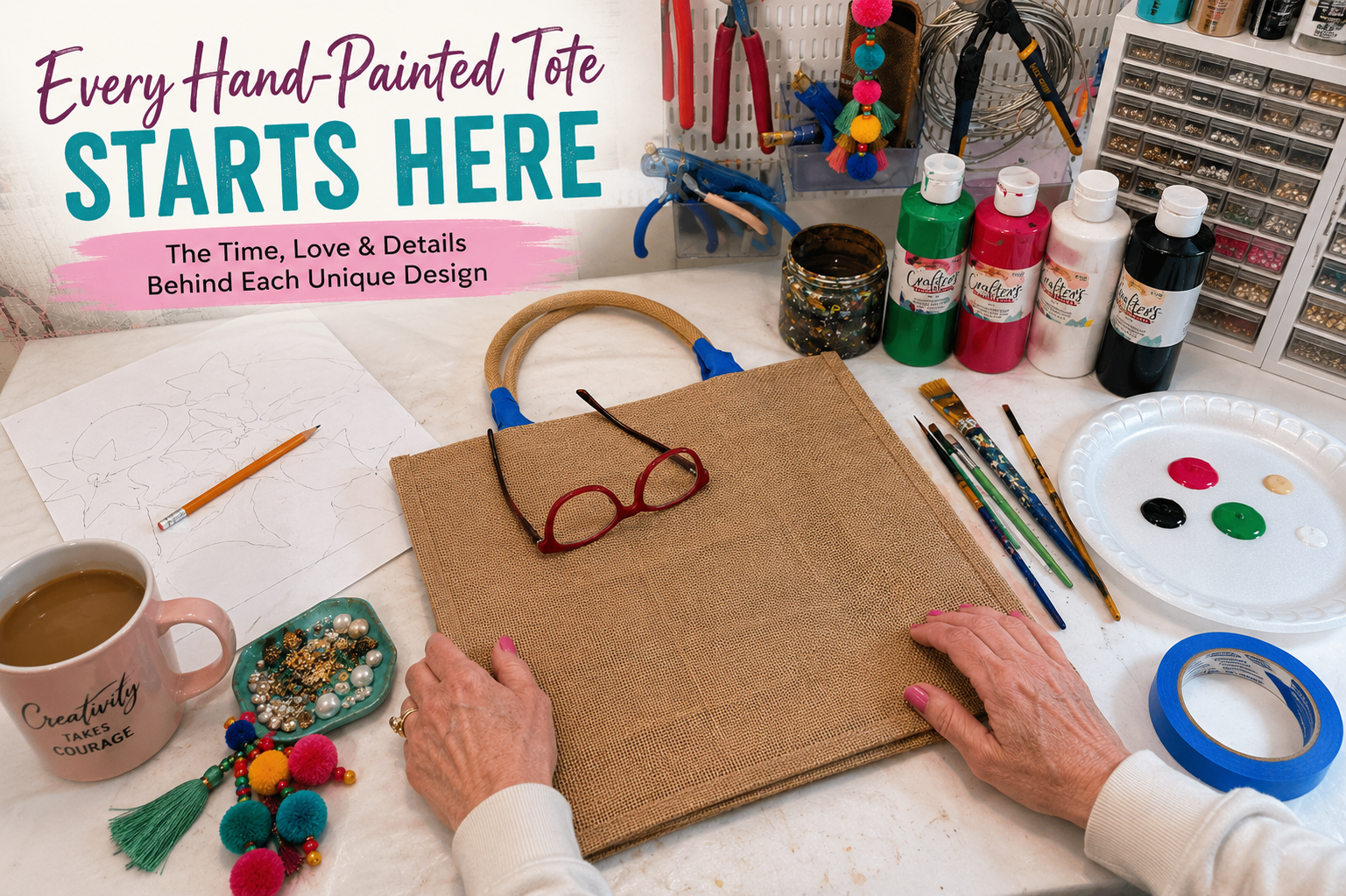
Every hand-painted tote begins as a blank canvas and goes through a careful, multi-day process before it's ready to ship. From preparing the bag to applying the final protective finish, every step helps create artwork that's designed to be carried and enjoyed for years.
Here's a look behind the scenes of how each Dana's Uncommon Glass tote comes to life.
Preparing the Tote

Every bag is carefully inspected before any paint is applied.
The handles and other areas that shouldn't receive paint are masked off to keep the finished piece looking clean and professional. Starting with careful preparation helps ensure every tote meets the same high standards before the artwork even begins.
Creating the Perfect Surface
Unlike painting on paper or canvas, jute fabric needs to be properly prepared.
Each tote receives a coat of gesso, which creates a smooth painting surface while helping the paint adhere beautifully. After this step, the tote dries overnight before the artwork can begin.
Taking time during preparation creates a stronger, longer-lasting finish.
Planning the Design

Before I pick up a paintbrush, I spend time planning.
Some designs begin with inspiration from nature, while others are inspired by fashion, travel, or everyday moments that make people smile. I sketch the artwork, choose the color palette, and decide whether embellishments such as pearls, metallic accents, rhinestones, or textured details will become part of the finished design.
No two totes are planned exactly the same way.
Painting the Background

The background is painted first using professional acrylic paints mixed with fabric medium.
Depending on the design, this layer may include soft coastal skies, ocean blues, textured neutrals, or vibrant colors that complement the artwork. Once complete, the paint is allowed to dry thoroughly before the main design is added.
Painting the Artwork

Now the tote truly begins to come to life.
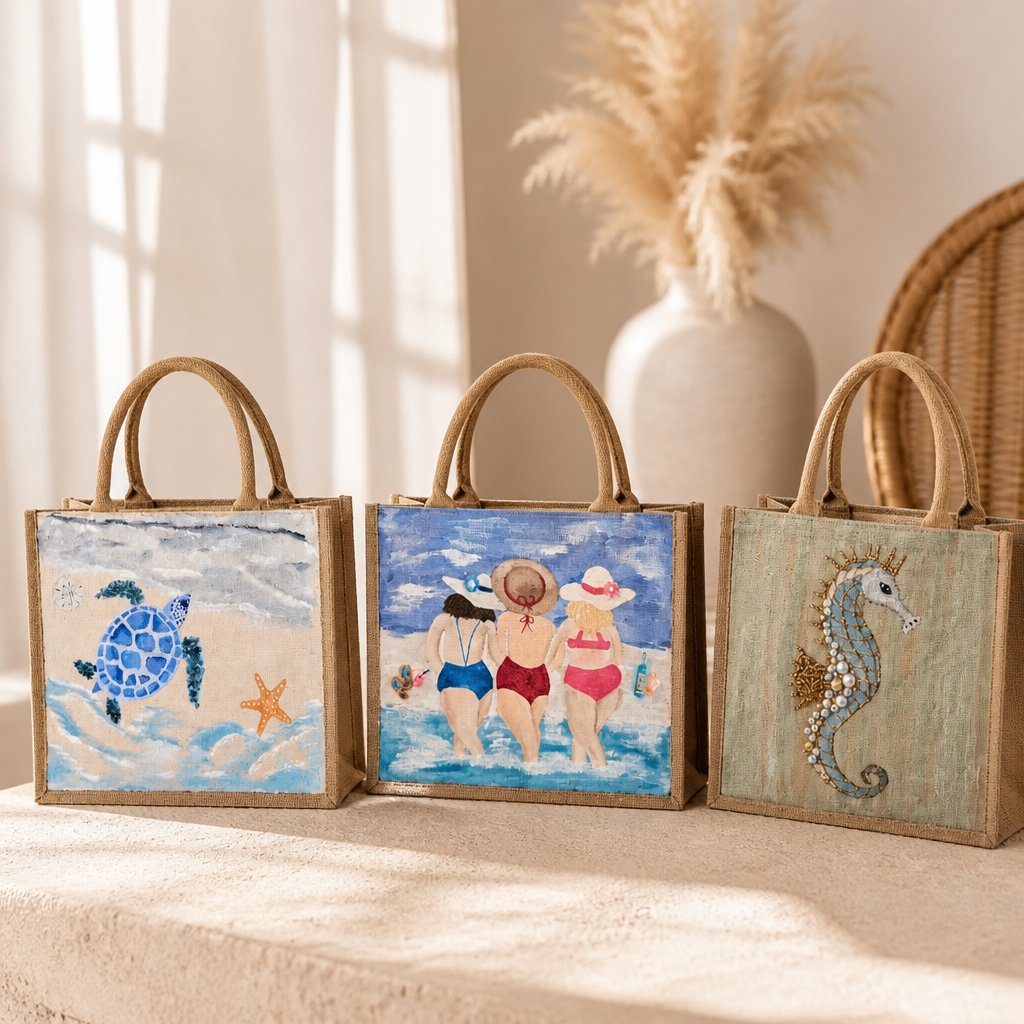
Depending on the complexity of the design, painting can take anywhere from one to four hours. A graceful Blue Heron requires different techniques than a colorful Funky Fish or an embellished Seahorse, and each brushstroke is painted by hand rather than printed by a machine.
This is also where every tote begins developing its own personality.
Adding the Finishing Details

Many designs don't stop with paint.
Pearls, metallic accents, textured embellishments, rhinestones, and dimensional details are carefully added by hand to enhance the artwork. Some designs require only a few finishing touches, while others—such as crowns or heavily embellished pieces—take considerably longer.
These handcrafted details help make every tote truly one of a kind.
Protecting the Artwork

Once the artwork is complete, a professional gloss resin is applied over the painted surface.
The tote then cures overnight, allowing the finish to harden properly before moving to the next stage. This protective finish helps preserve both the painted artwork and the dimensional embellishments while creating the rich glossy finish that has become part of my signature style.
Final Inspection and Finishing
After curing, the masking is removed and each tote receives its final finishing touches.
For jute totes, this includes installing the magnetic closure, attaching my artist logo inside the bag, adding the hang tag, and completing a final inspection before the tote is carefully packaged for its new home.
Only after every step is complete is the tote ready to ship.
Why the Process Matters
While the actual painting may take only a few hours, creating a finished hand-painted tote is a process that unfolds over several days.
Every stage—from preparation and painting to curing and final inspection—plays an important role in creating artwork that's both beautiful and durable. Slowing down allows each tote to receive the attention it deserves, and that's part of what makes every piece unique.
If you're choosing your first hand-painted tote, my guide on How to Shop for a Hand-Painted Tote Bag can help you decide which style is the best fit for you. Once you've found your favorite, How to Care for Your Hand-Painted Tote (Jute, Canvas & Rope Handle) shares simple tips for keeping it looking beautiful for years to come. And if you're wondering why original artwork creates such a different experience than mass-produced designs, you'll enjoy What Makes Hand-Painted Better Than Printed for Tote Bags.
Explore the Coastal Collection
If you've ever wondered what goes into creating a hand-painted tote, I hope this behind-the-scenes look gives you a greater appreciation for the craftsmanship behind every piece.
From the first coat of primer to the final protective finish, every tote is individually painted and finished by hand in my Las Vegas studio.
Browse the Coastal Collection to discover original hand-painted tote bags inspired by the sea, designed to be carried, enjoyed, and treasured long after summer ends.

Written by Dana Harding


Leave a comment
This site is protected by hCaptcha and the hCaptcha Privacy Policy and Terms of Service apply.